
How Early Experiences Shape the Brain’s Strategy for Learning
New research shows that the structure of previous experiences can influence how animals learn new tasks and how neural circuits organize information.
Researchers at the University of Utah have investigated how the structure of previous learning affects the strategies animals use to solve new and more complex problems. By combining recurrent neural networks (RNNs) with behavioral experiments and neural recordings from mice, the researchers found that structured early training can promote more flexible and generalizable strategies, while poorly structured training can lead to persistent errors. The findings provide new insight into how previous experience shapes both behavior and the underlying dynamics of the brain.
Why was this study conducted?
Animals constantly encounter new situations that require them to apply knowledge from previous experiences. Rather than learning every new task from the beginning, the brain can reuse previously learned information and combine it into new strategies.
However, previous experience does not always improve future learning. The structure of training, or the order and organization in which information is introduced, may influence which strategies an animal develops. Poorly designed training can cause an animal to become “stuck” using an inefficient strategy even when a better solution is available.
The medial entorhinal cortex (MEC), a region of the medial temporal lobe involved in spatial, contextual, and timing-related processing, is particularly interesting in this context. Previous research has shown that the MEC is important for learning complex timing behaviors.
The researchers therefore asked whether structured early experience changes the way neural systems represent a task and whether these changes could explain why some learning strategies are more flexible than others.
How was the research performed?
The researchers first created recurrent neural networks (RNNs) that were trained to perform a complex odor-timing task based on an experiment previously used with mice.
In the task, mice were presented with two odors of the same identity but with different durations. A short odor lasted 2 seconds, while a long odor lasted 5 seconds. Animals had to determine whether the two odor durations matched or differed. On non-matching trials, mice were expected to lick a reward spout during a specific response window, while on matching trials they were required to withhold their response.
The researchers compared different training strategies. Some RNNs first received a structured shaping task in which only the non-matching trials were presented before they learned the complete task. Other networks received no shaping experience. The researchers also tested whether providing only one type of non-matching trial during training would produce the same benefits.
The researchers then tested these predictions in C57BL/6 mice. Eleven adult mice were trained using corresponding shaping procedures, and neural activity was recorded from the medial entorhinal cortex using Neuropixels probes. This allowed the researchers to compare the computational strategies predicted by the RNNs with activity patterns observed in the mouse brain.
Main findings
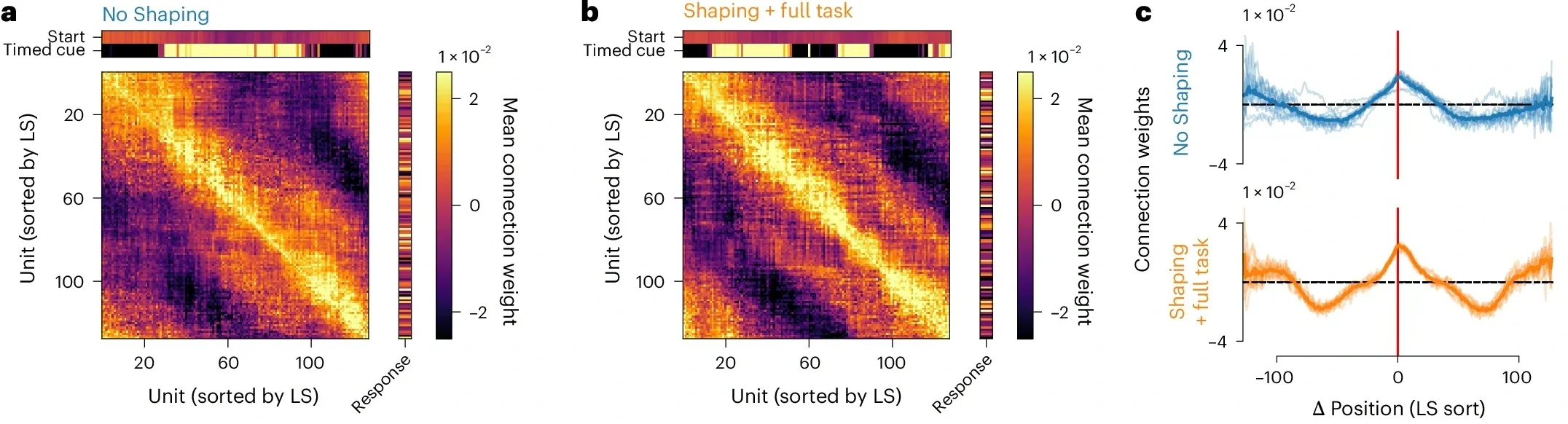
Figure 1. What effect does the shaping task have on the eventual architecture of RNNs after learning?
The researchers first found that structured training improved the ability of RNNs to perform the task accurately and robustly. Networks that received the structured shaping experience were better able to perform the task when noise was added to the sensory input or when the timing of the odors was slightly altered.
In contrast, networks that received no shaping experience developed stereotypical errors. For example, some networks responded too early during certain trials, making it difficult to distinguish correctly between trials requiring a response and those requiring no response.
The researchers then examined the internal activity of the networks. RNNs that received structured training developed a lower-dimensional and less tangled representation of the task. Rather than treating each trial as an entirely separate problem, these networks developed a more general representation of elapsed time that could be applied across different trial types.
This distinction was particularly important for generalization. Networks with structured training were better able to recognize the underlying timing structure of the task even when it appeared in a different context. The researchers described the resulting strategy as a “Detector + Timer” strategy, in which the network separates information about the timing of the trial from information used to determine when to respond.
The researchers also discovered that not all training experiences were equally useful. When networks were trained only on one type of non-matching trial, they failed to gain the same advantage as networks exposed to both types. Instead, these networks often learned a simpler but incorrect strategy, such as responding whenever a long odor was presented.
This suggests that simply giving an animal or neural network “more experience” is not necessarily sufficient. The particular structure of that experience determines which abstractions are learned.
What did the mouse experiments show?
The researchers next tested whether the patterns observed in the RNNs also appeared in biological neural circuits.
Mice that received the standard structured shaping procedure were better able to generalize the timing structure of the task than mice that received only one type of non-matching trial. Neural recordings from the medial entorhinal cortex showed corresponding differences in population activity.
In particular, mice receiving structured training displayed lower-dimensional neural representations, with activity patterns resembling those observed in the appropriately trained RNNs. Their neural trajectories were also less “tangled,” meaning that similar neural states were less likely to represent very different points in time or different contexts.
The researchers then used the RNNs to make predictions about how mice would respond to situations they had not previously encountered. The models predicted that mice would respond to several novel combinations of odor durations, including two long odors, two medium-length odors, and a single extra-long odor.
The behavioral experiments supported these predictions. Mice responded to the previously untrained long-long and medium-medium trials and also responded when presented with a single 10-second odor. These results suggest that the animals had learned something more general than simply memorizing the specific trial combinations used during training.
Why are these findings important?
The findings suggest that learning is influenced not only by what an animal experiences, but also by how those experiences are organized.
Structured training appears to provide a kind of computational scaffold. Instead of learning every situation independently, the brain can develop a more general representation that captures relationships shared between different situations. This may allow previously learned information to be recombined when an animal encounters a new problem.
The study also demonstrates how computational models can be used to generate experimentally testable predictions about the brain. The researchers first examined how different training histories changed the internal dynamics of RNNs and then used those models to predict behavioral and neural patterns in mice. Several of these predictions were subsequently observed in the animals.
These findings could also have implications beyond neuroscience. The principle resembles curriculum learning in artificial intelligence, where the order in which a model encounters information can affect how efficiently it learns more complicated tasks. Understanding how biological systems benefit from structured experience may therefore provide insight into both animal learning and the design of artificial learning systems.
Limitations
Several limitations should be considered when interpreting the findings. First, the RNNs were designed to perform a single timing task and were not intended to reproduce the full biological complexity of the mouse brain. The researchers specifically note that the models were not biophysical models fitted directly to neuronal data and did not use biologically realistic learning rules.
Second, the experiments focused on a particular odor-timing task and on the medial entorhinal cortex. It remains unclear whether the same neural mechanisms would apply to other types of learning or to more complex behaviors.
Finally, the study shows that previous experiences can either improve or interfere with future learning, but it does not establish a universal rule for designing the optimal training sequence. The researchers suggest that future studies should examine how experiences from different tasks interact and whether training strategies can be optimized before being tested in animals.
References
Bowler, J. C., Azhar, D. B., Jensen, C. M., Lee, H.-W., & Heys, J. G. (2026). Structured experience shapes strategy learning and neural dynamics in the medial entorhinal cortex. Nature Neuroscience. https://doi.org/10.1038/s41593-026-02409-7